HSC · 2017 syllabus · 2019–2026 papers
Physics What eight HSC papers tell us about 2027
All 349 question parts from 2019–2026, read against the syllabus, NESA’s marking guidelines and marker feedback (2019–25) · Prepared November 2026 for teachers · 2027 is the last paper on this syllabus
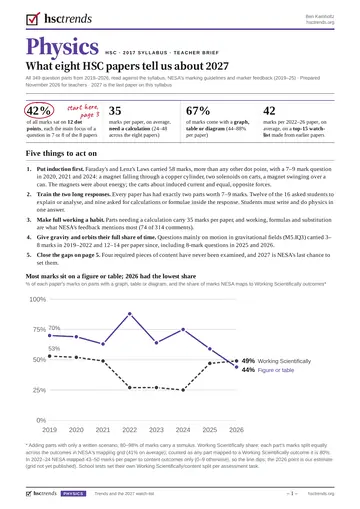
Headline numbers from the teacher brief
- 42% of all marks sat on 12 dot points, each the main focus of a question in 7 or 8 of the 8 papers
- 35 marks per paper, on average, need a calculation (24–48 across the eight papers)
- 67% of marks come with a graph, table or diagram (44–88% per paper)
- 42 marks per 2022–26 paper, on average, on a top-15 watch-list made from earlier papers
Downloads free to print and share
Teacher brief
Trends and the 2027 watch-list
For teachers and heads of department planning the 2027 course. Its five things to act on:
- Put induction first
- Train the two long responses
- Make full working a habit
- Give gravity and orbits their full share of time
- Close the gaps on page 5
Then how the paper is built, the 2027 watch-list year by year, required content not yet examined, what markers reward, and the method.
Download the teacher briefPDF · 6 pages · 158 kB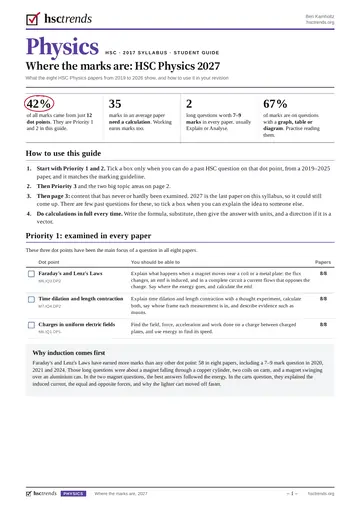
Student guide
Where the marks are, 2027
What the eight HSC Physics papers from 2019 to 2026 show, and how to use it in your revision. For Year 12 students to print and tick off. Its headline numbers:
- 42% of all marks came from just 12 dot points. They are Priority 1 and 2 in this guide.
- 35 marks in an average paper need a calculation. Working earns marks too.
- 2 long questions worth 7–9 marks in every paper, usually Explain or Analyse.
- 67% of marks are on questions with a graph, table or diagram. Practise reading them.
Sections:
- How to use this guide
- Priority 1: examined in every paper
- Priority 2: examined in 7 of 8 papers
- Priority 3: the rest of the top 20
- Don’t get caught out
- What markers reward
The papers themselves
The reports refer to questions by year and number. The papers, marking guidelines and marker feedback are published by NESA: NESA’s HSC exam papers: Physics. How it works explains how the marks were counted.